Hurry! Limited period offer, sale concludes today. 🚀

Titanium Pro Cutting Board
$57.99$75.39
Size: 34CM x 23CM

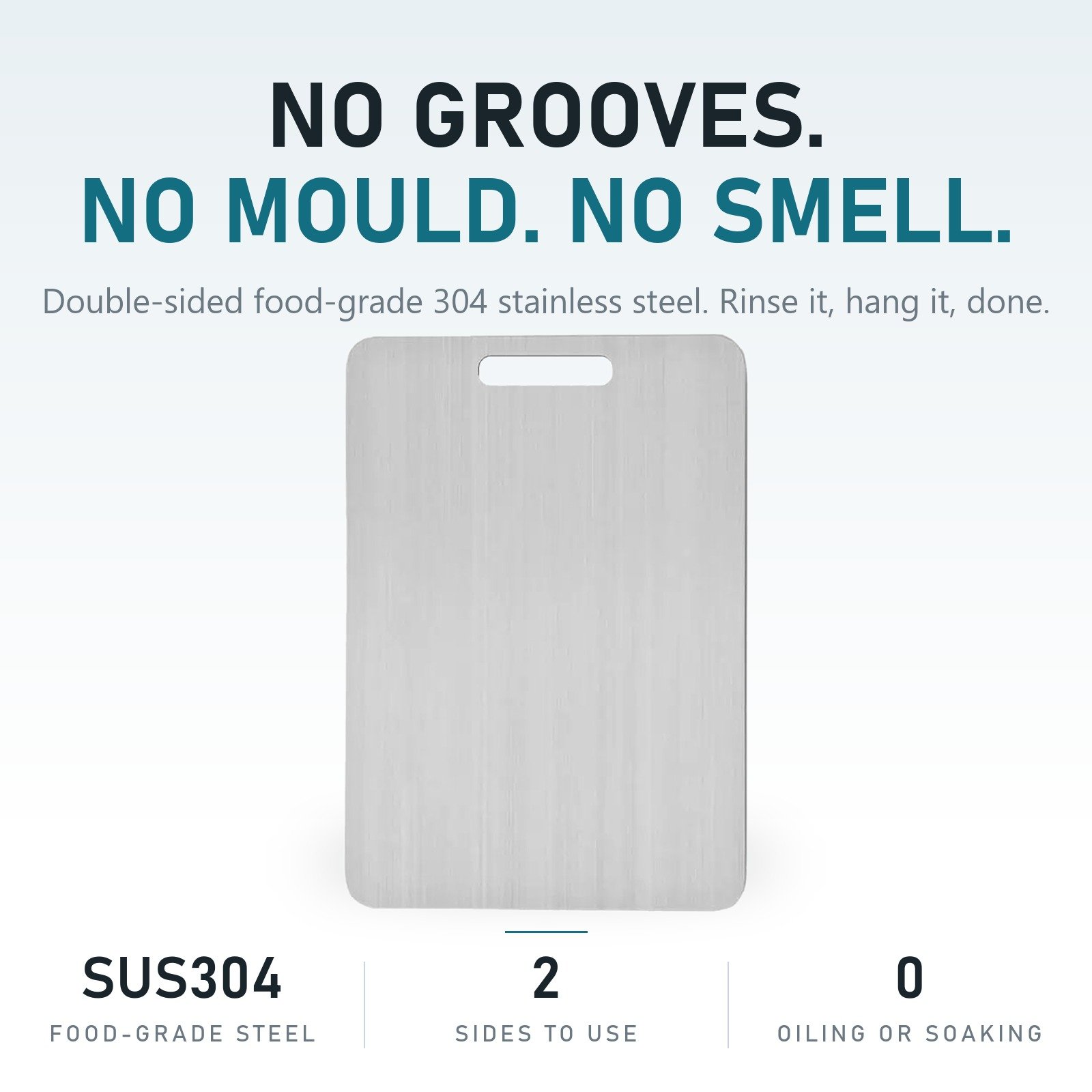
Food-grade 304 stainless steel
Your board is older than the food you put on it.
Every cut on a wooden or plastic board leaves a groove. Water sits in it. Meat juice sits in it. Then the next meal goes on top. Scrubbing gets the surface — it never gets the grooves.
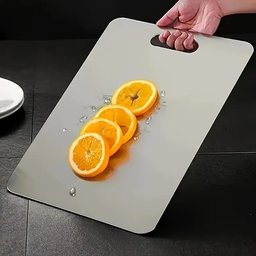
The Titanium Pro Cutting Board is a single pressed sheet of food-grade 304 stainless steel. Nothing soaks in, nothing swells, nothing goes black at the edges. You rinse it, you hang it, and it looks the same in a year as it did on day one.
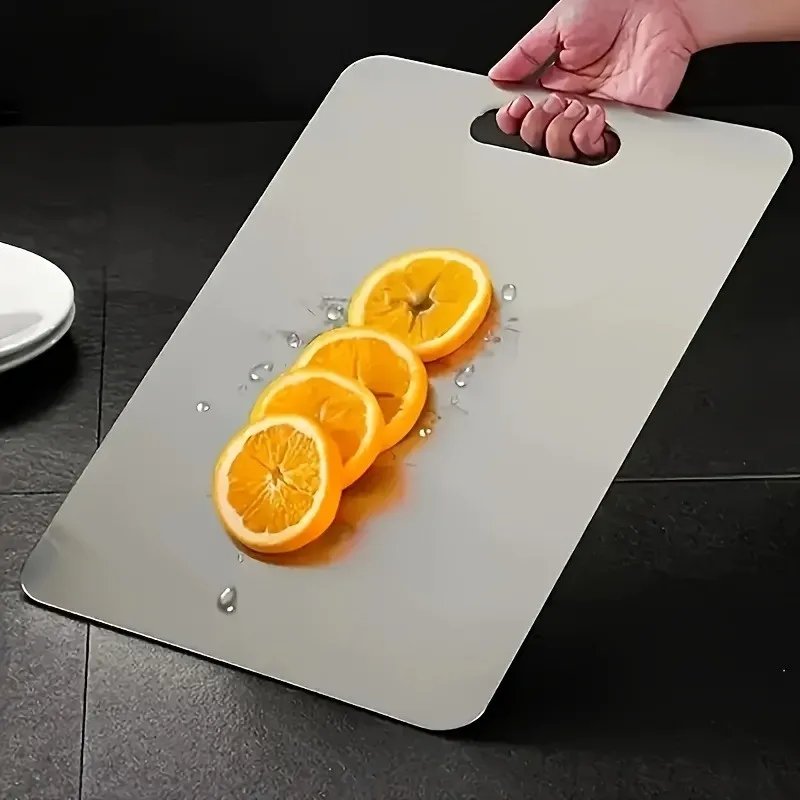
Why people switch
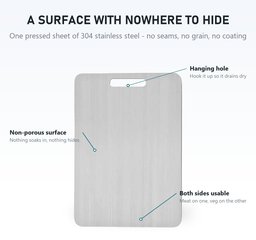
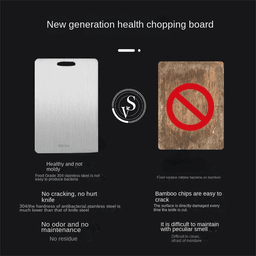
Non-porous surface. Water, oil and meat juice stay on top of the steel instead of soaking into it.
No odour carry-over. Garlic, onion and fish rinse off instead of living in the board.
Two sides, two jobs. Raw meat on one face, vegetables and fruit on the other.
Kind to your edge. 304 is softer than hardened knife steel, so the board takes the mark, not your blade.
No upkeep at all. No oiling, no soaking, no drying ritual. Rinse or dishwasher, then hang it on the hook.
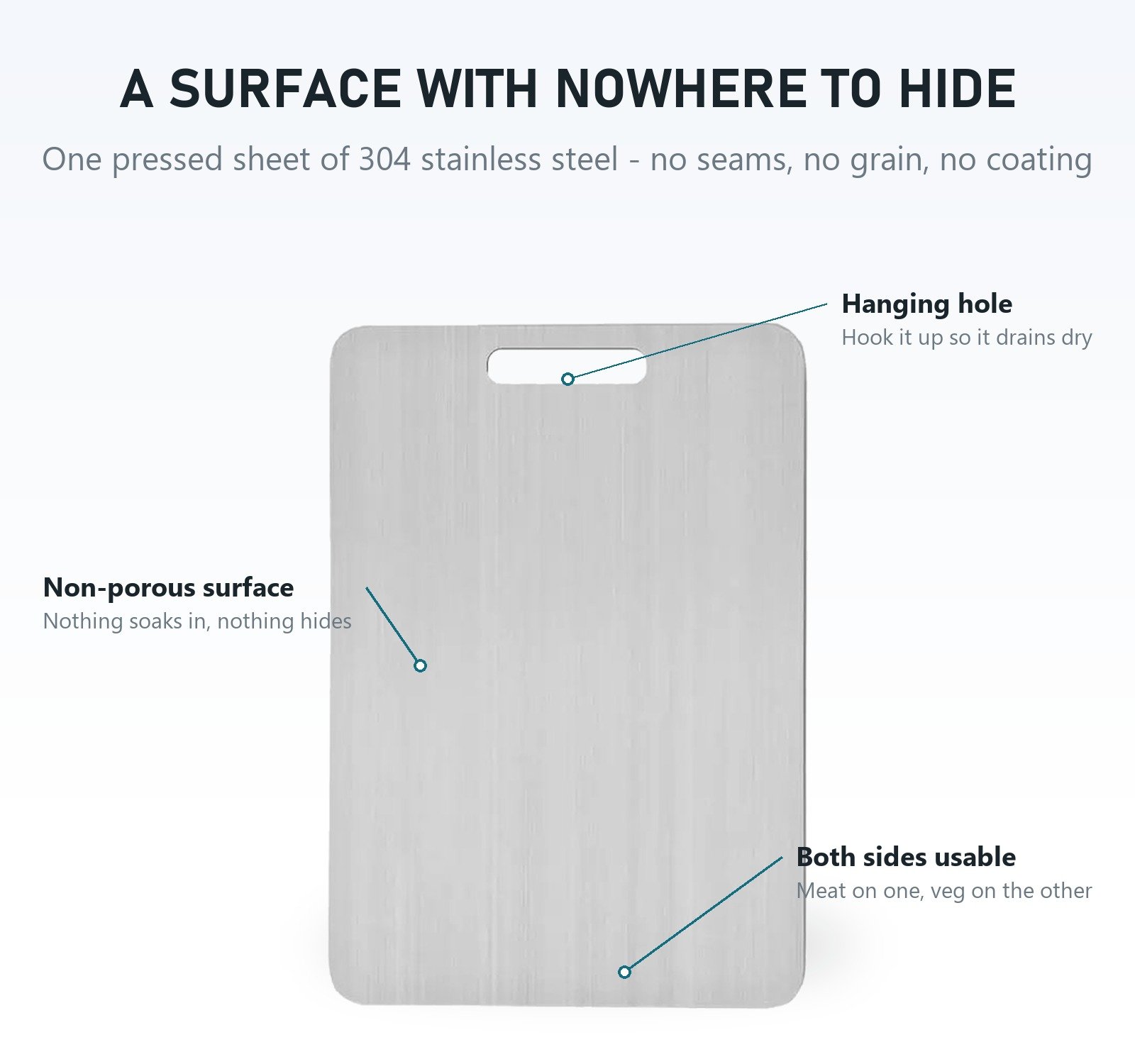
Wood looks lovely. Then you turn it over.
Wood and bamboo are made of fibres, and fibres drink. Moisture goes in through the knife cuts, the board stays damp underneath, and in a warm kitchen that is where mould and the stale smell come from. Bamboo also splits along the grain, so every cut opens the surface a little further.
Plastic has the opposite problem. It is soft, so it scars quickly, and once it is covered in deep cuts the scratches hold food residue that a sponge cannot reach.
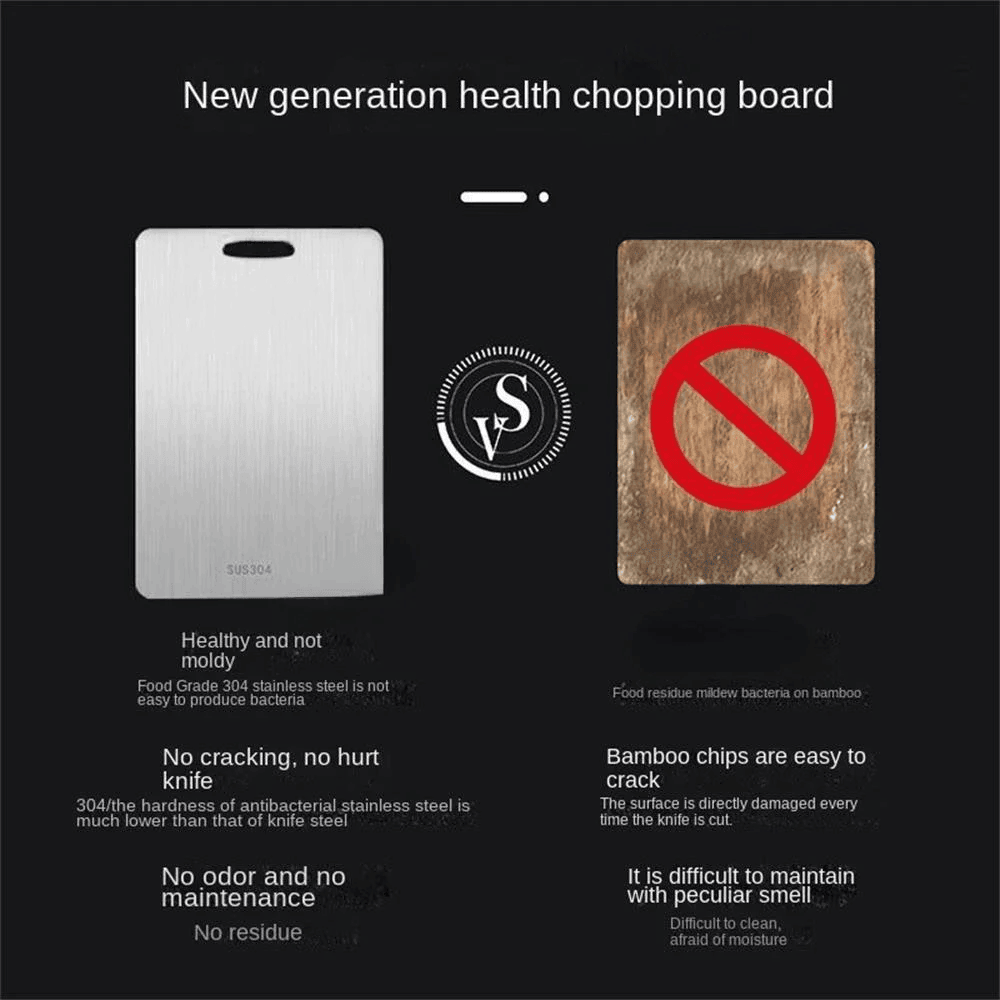
Steel — non-porous, nothing absorbed, nothing to split. Rinse and hang.
Wood & bamboo — absorbs moisture and smells, needs oiling, cracks along the grain.
Plastic — scars fast, and the deep cuts trap what you were trying to wash off.
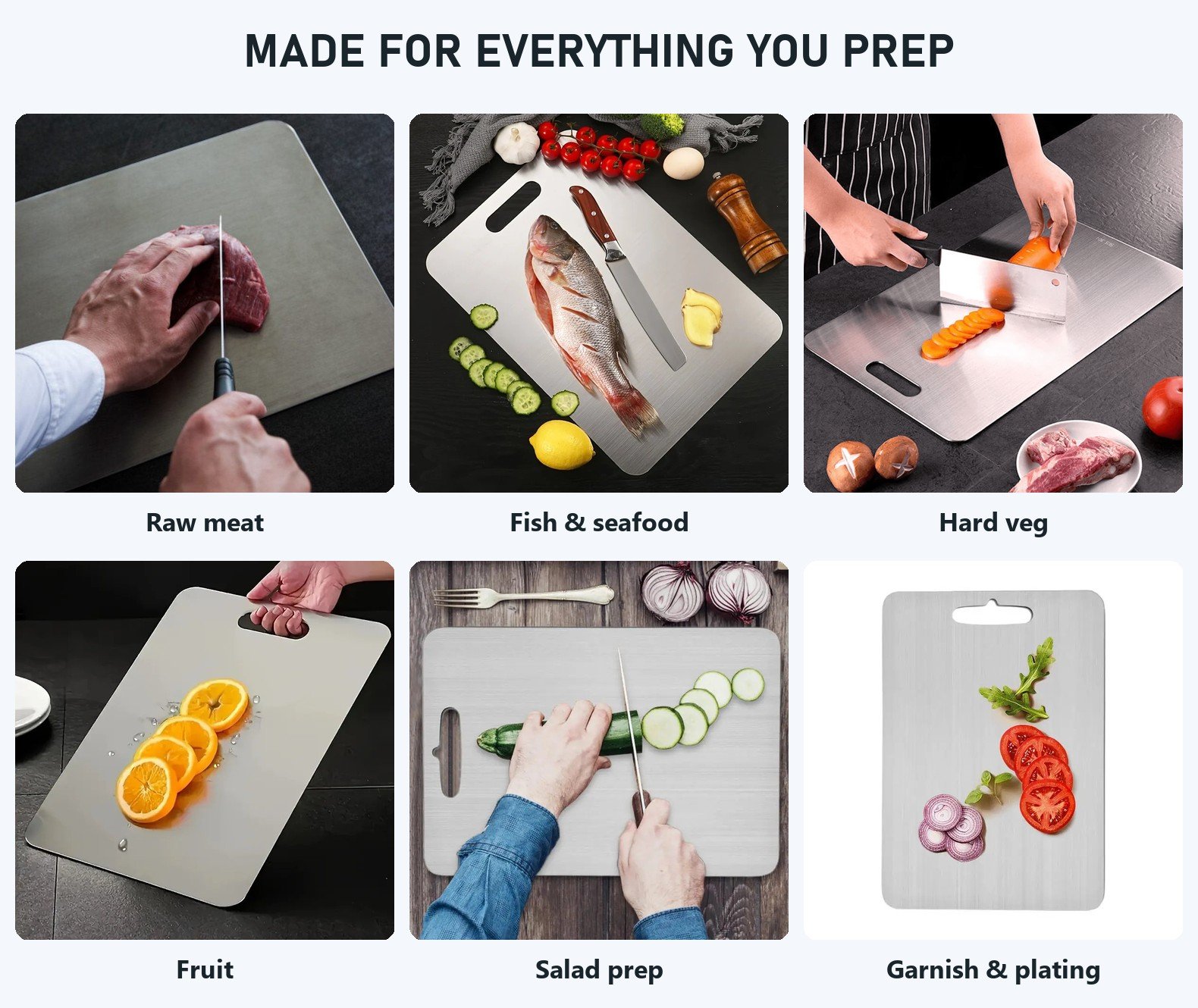
One surface for the whole prep board — flip it between raw and ready.
Three steps, then forget about it
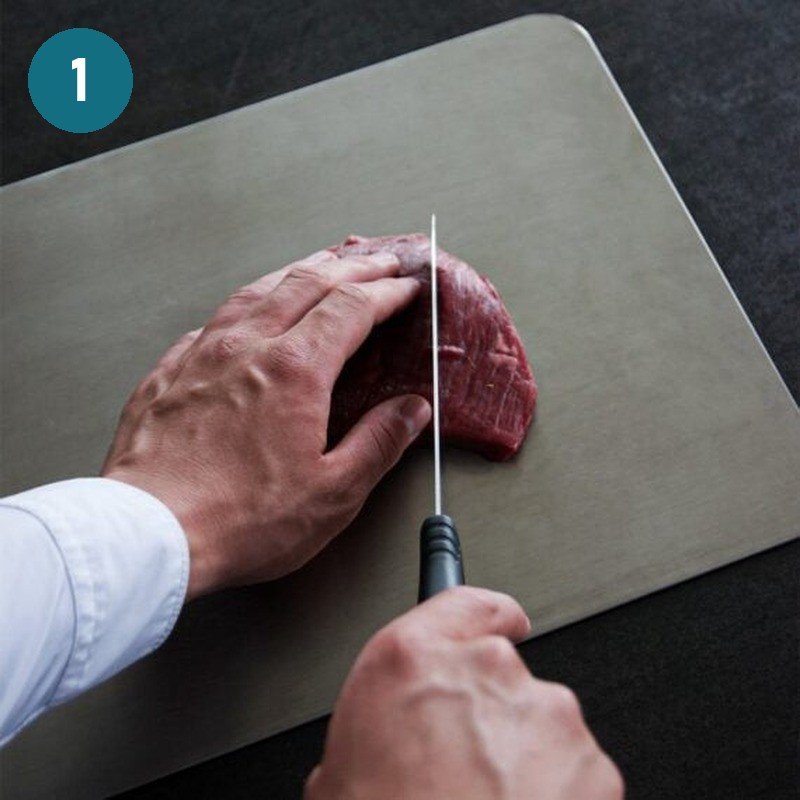
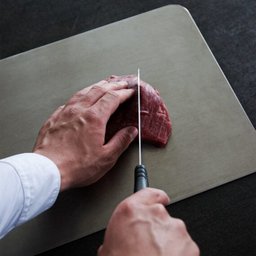
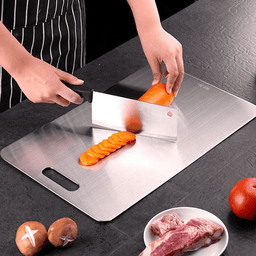
Cut. Use either face — keep one for raw meat and fish, the other for everything else.
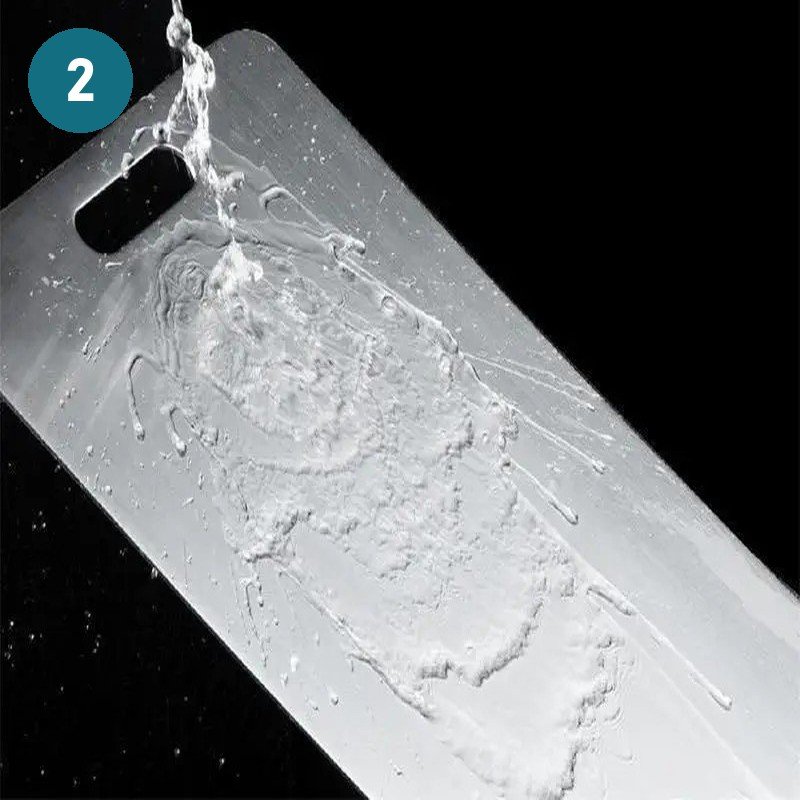
Rinse. Warm water and washing-up liquid, or straight into the dishwasher. No oiling, no soaking.
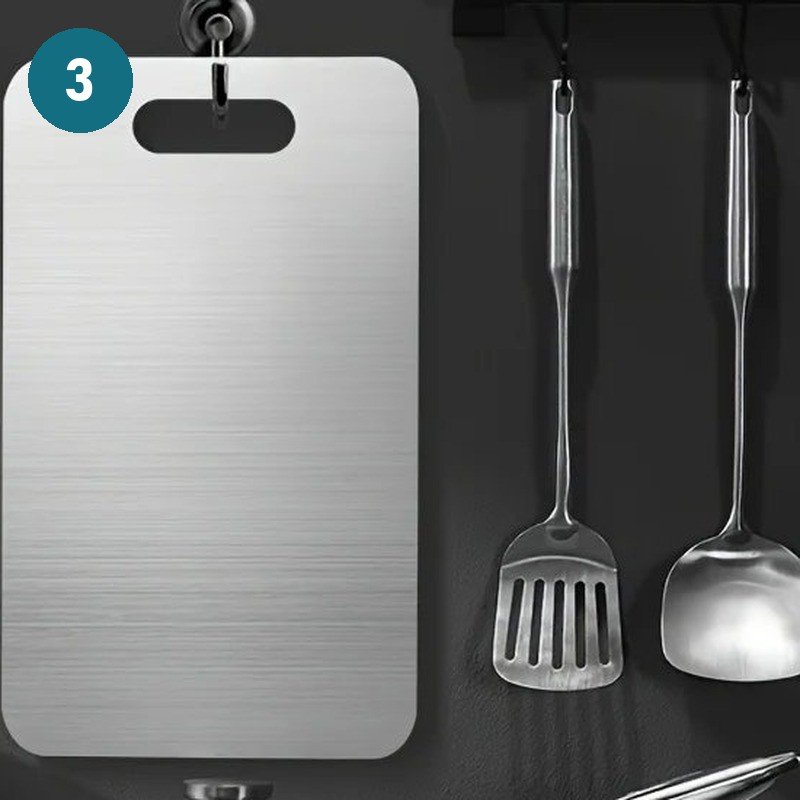
Hang. The cut-out handle hooks onto a rail so it drains and dries on its own.
Which size fits your counter?
Three sizes, measured across the board itself.
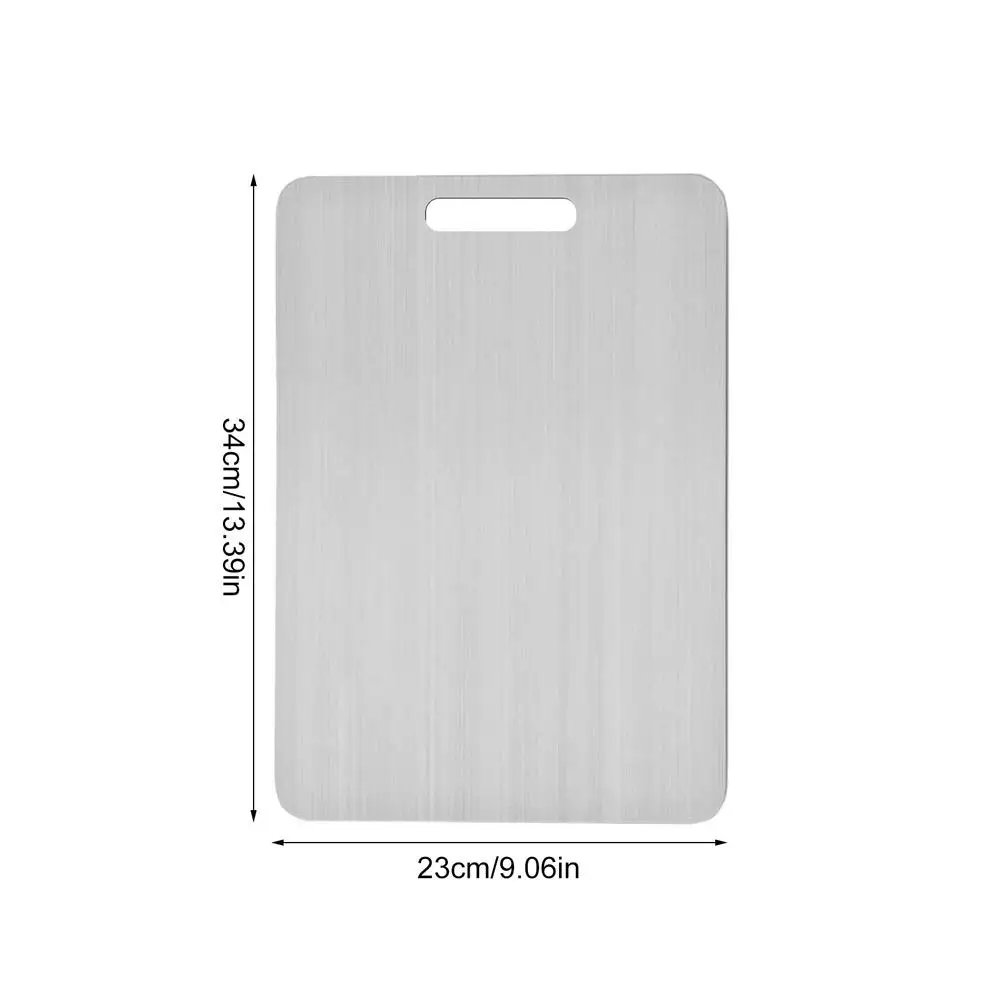
34 × 23 cm (13.4 × 9.1 in)
Small kitchens and quick jobs — herbs, fruit, a sandwich, one portion of veg.
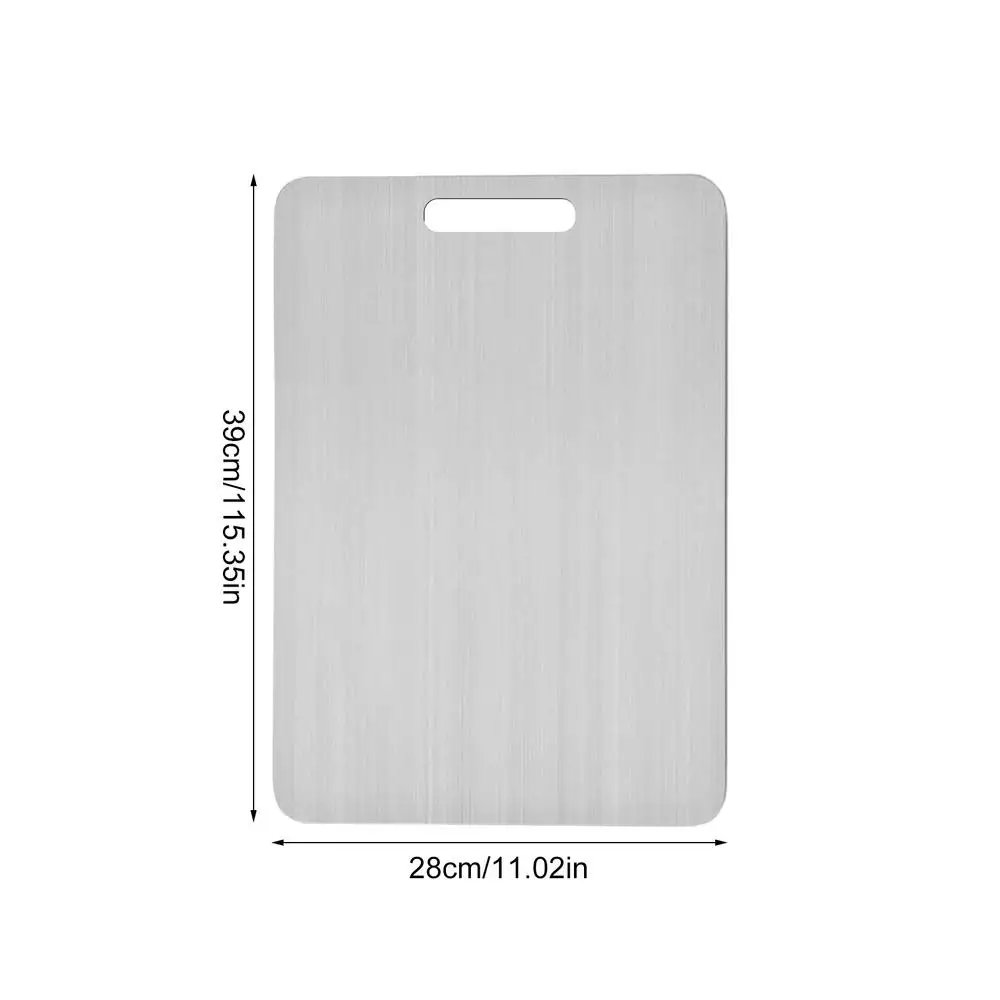
39 × 28 cm (15.4 × 11.0 in)
The everyday size. Room for a full dinner's worth of chopping without pushing things off the edge.
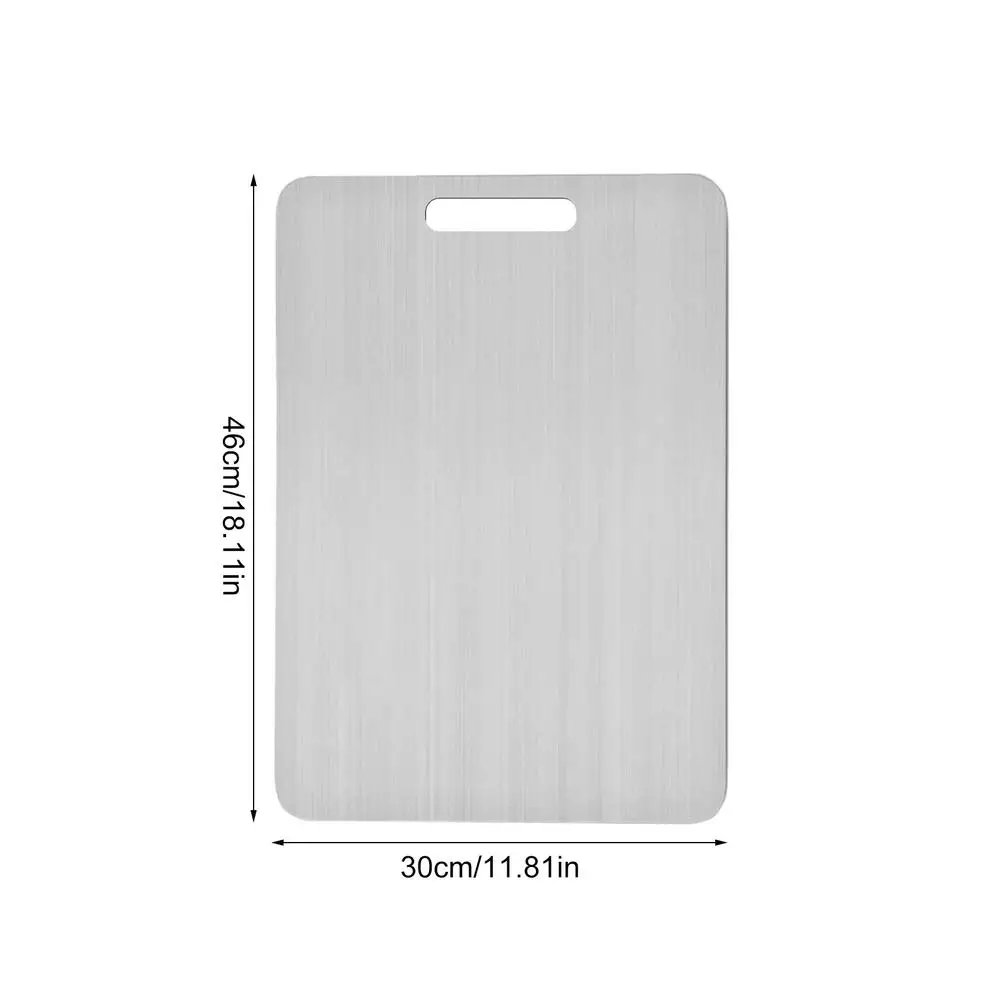
46 × 30 cm (18.1 × 11.8 in)
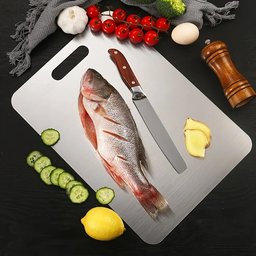
Batch cooking, a whole fish, a family roast — space to lay everything out and still have somewhere to put the knife.
The details
Material: food-grade 304 stainless steel (SUS304), uncoated
Build: one pressed sheet, rounded corners, cut-out hanging handle
Surfaces: double-sided, both usable
Sizes: 34 × 23 cm / 39 × 28 cm / 46 × 30 cm
Care: hand wash or dishwasher · no oiling or conditioning
Questions people ask first
What exactly is it made of?
Food-grade 304 stainless steel — the same grade used for sinks, pans and commercial kitchen worktops. It is one pressed sheet with no coating and no laminate, so there is nothing on the surface that can wear off into your food.
Will it blunt my knives?
304 is noticeably softer than hardened knife steel, so the board marks before your edge does. It will still feel firmer than wood, so use normal slicing pressure and keep your knives sharpened as usual. For heavy hacking — jointing a chicken, cracking bones — use a thick block instead.
Can I really use both sides?
Yes. The board is the same steel through and through, with no front or back. Most people keep one face for raw meat and fish and the other for vegetables, fruit and bread.
How do I clean it?
Warm water and washing-up liquid, or put it in the dishwasher. Because the surface is non-porous there is nothing to scrub out of the grain — a rinse does it. No oiling, no conditioning, no overnight drying.
Will it rust or stain?
304 is the stainless grade chosen for kitchens precisely because it resists rust and staining. Dry it after washing and don't leave salty or acidic liquid pooled on it overnight and it will stay clean-looking.
Does it hold onto garlic and onion smells?
No. Smell clings to boards because the oils soak into the fibres. Steel has no fibres to soak into, so the smell goes down the drain with the rinse water.
Does it slide around on the worktop?
On a dry counter it sits still. If your worktop is very smooth, lay a damp tea towel or a sheet of kitchen paper underneath — the same trick people use with wooden boards.
Where do I keep it?
Anywhere a wooden board won't go. The cut-out handle hooks onto a utensil rail or a cupboard hook, and because it is flat it also slides upright beside the hob or into a narrow gap.
Which size should I start with?
If you cook most nights, 39 × 28 cm is the one that gets used. Pick 34 × 23 cm for a small kitchen or a second board, and 46 × 30 cm if you batch cook or prep for a family.
One board instead of the next three
If anything isn't right when it arrives, message us and we'll put it right. Real people answer, and we'd rather sort it than leave you with a board you don't use.
Get Yours Today →